Thursday, August 2, 2012

Of gorillas and gasbags

So, Armadillocon has came and went, and everybody else in the whole of creation has posted their thoughts and comments about the convention except me. Par for the course, I'd say. I've got a larger wrap-up coming, but I'd like to focus for the moment on Friday night's "Gorilla of the Gasbags" story challenge panel. As I mentioned last week, Joe Lansdale threw out a challenge a year ago to write a story centered around the cover of an exceptionally rare issue of Zeppelin Stories. We had one year to write them, and present the finished product at the panel in question.

Quite a few folks turned out with stories, myself included. "Prince Koindrindra Lives" is a direct sequel to my story "Prince Koindrindra Escapes," which appeared in Cross Plain Universe back in 2006. Except, since I'm not a particularly fast writer, and I'd only completed the first draft of my Chicken Ranch book the week before, I didn't get mine completed. Specifically, I wrote about 11 pages of what will probably be a 30-page tale once all is said and done. Everybody else finished theirs. Or at least claimed to. I'm not going to accuse anyone of bending the truth a bit, but those folks who hung me out to dry know who they are.

The Gorilla of the Gasbags story challenge panel at Armadillocon 2012

The Gorilla of the Gasbags story challenge panel at Armadillocon 2012

The Gorilla of the Gasbags story challenge panel at Armadillocon 2012

Bill Crider lapped the field by writing two stories on the topic. Edgar Rice Burroughs was a popular touchstone, and Mark Finn got in a jab at L. Sprague de Camp. Chris Brown wowed everyone with the revelation that his grandfather actually worked in a German Zeppelin factory, and had a trove of artifacts and souvenirs from those days. Chris also went against the grain by writing a borderline-pornographic innuendo-laden story based on the secondary "Balloon Juice" title from the pulp cover. It was, I must admit, magnificent.

I ended up reading several pages of Neal Barrett, Jr.'s story, as he couldn't make the panel (it's a corker!) as well as a little more than half a page of mine. I got lots of compliments afterward about my reading, but I found it a tad troubling that some folks hadn't realized I'd done two separate readings (Neal's and my stories both had strong 1930s German elements to them). To clear up any further confusion, here is what I read (it might help to know that Koindrindra is a 30-foot-tall ape who has just skydived along with 100 or so paratroopers into Castle Neuschwanstein):
Koindrindra had barely taken two steps toward the keep when the giant doors exploded open, propellering through the courtyard to embed themselves in the Palas wall. The very force knocked Koindrindra back. He stared at the keep, not believing his eyes.

Through the smoke-filled doorway, backlit by a hundred work lights, rumbled a massive... something. Mounted on a twenty-foot armored tank chassis, a sectioned cylindrical torso rose with a black Iron Cross emblazoned across the chest. One either side of the armored cylinder extended two jointed, hydraulic arms. One ended in a vice-like clamp, the other in a still-smoking gun barrel. Mounted atop the torso, more than thirty feet high, sat what could only be described as a head, ape-like in design.

The mad Fritz could not win against Koindrindra on the field of battle, so they'd build a mechanical abomination to do it for them.

Panzer Affe!
Amazingly, every single story fragment read came off as solid, quality literature. Don Webb actually recited his from memory, as he'd forgotten his manuscript. Amazing. This really needs to be anthology, as the stories ranged widely in tone and theme. I'd certainly buy it.

The Gorilla of the Gasbags story challenge panel at Armadillocon 2012

The Gorilla of the Gasbags story challenge panel at Armadillocon 2012

The Gorilla of the Gasbags story challenge panel at Armadillocon 2012

Friday, July 27, 2012

Lost Trails

From the pulp magazine ADVENTURE, November 1945, a little bit of mid-twentieth century paper-based network culture:

LOST TRAILS

NOTE: We offer this department to readers who wish to get in touch again with friends or acquaintances separated by years or chance. Give your own name and full address. Please notify ADVENTURE immediately should you establish contact with the person you are seeking. Space permitting, each inquiry addressed to Lost Trails will be run in three consecutive issues. Requests by and for women are declined, as not considered effective in a magazine published for men. ADVENTURE will also decline any notice that may not seem a sincere effort to recover an old friendship or for any other reason in the judgment of the editorial staff. No charge is made for publication of notices.

>>>

I would like to hear from Albert "Shorty" Armstrong, and "Butsy" Butterfield, who were members of the 13th U.S. Infantry Band in 1924 at Fort Warren, Mass. Also Philip Smith, Jr., who lived on Gainsborough St., Boston, in 1941. I have recently been discharged from the Army Air Force and would like to hear from some of the old buddies of the old days. John J. Delaney, 227 Broadway, Cambridge, Mass., 39.

Alex "Scotty" Mackie, age 34, weight 125, height 5' 3", blue eyes, dark brown hair, missing since 1939. Last heard from in Cleveland, Ohio. Anyone knowing of his recent whereabouts please communicate with his brother, Robert Mackie, 3774 Highland Road, Cleveland, 11, Ohio.

Captain Rudolph Petersen, who used to write sea stories, formerly lived at Locust Street, 133 Street, Bronx, New York City, N.Y. Last heard from 1940. Anyone knowing his present address please communicate with Norman Gilmartin, c/o General Delivery, Brooklyn General Postoffice, Brooklyn, N.Y.

Anyone knowing the whereabouts of John S. Peebles, Jr., please write J.S. Peebles, White Cloud, Michigan, RFD No. 2. His parents have considered him dead but have lately heard that he is still alive and they have been unable to obtain his address.

Bill Arenz, who left Jacksonville, Ill., in 1940: I am married to your daughter, and would like to meet or hear from you. E.D. Meany, 407 Highland Ave., Palisade Park, N.J.

Monday, July 9, 2012

Burial at Sea (today's in-flight movie)

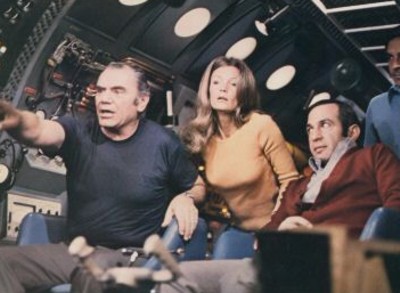
The 1:35 scale cathode ray simulation of Ernest Borgnine packs himself into a yellow wetsuit, channeling Jacques Cousteau. Sealab has been knocked loose from its moorings. Ernest Borgnine is riding in a futuristic submersible made from the remains of plastic models of German tanks. The Neptune floats in a fishtank embedded into the airplane seatback. Ernest Borgnine exits through the airlock, floating free with the giant burbling bubbles. Inside the submersible, minor world historical figure Ben Gazzara wears a red Mr. Rogers cardigan. Yvette Mimieux, an imaginary marine biologist, watches over his shoulder. The view through the porthole is a television screen of a made-for-TV movie. Ernest Borgnine is beautiful floating in yellow rubber, as a tropical fish grown in the back room of a Toronto pet store tries to eat him, or kiss him, it's hard to tell.

((RIP Ermes Effron Borgnino, who lives on as a semiotic ghost lurking in the mediasphere))

Tuesday, June 5, 2012

Transiting Venus

Sometimes, when faced with a once-in-a-lifetime event, you don't let anything so mundane as blistering Texas heat, a cloudy sky or a tragically cracked telescope mirror get in the way. There are other, better photos of the transit of Venus across the face of the sun out there, but not so many from New Braunfels and not so many taken under circumstances as trying.

Transit of Venus, June 5, 2012

The silhouette of Venus is the circle in the upper right quadrant of the sun. Quite a few sunspots are also visible, as is a region of brighter, white detail near the south pole. All things considered, this white light image of the sun (taken using Baader solar film filters--never look directly at the sun without specialized filters!) was able to capture quite a bit of fine detail, brought out with a little bit of coaxing via Photoshop. Someday I hope to own a dedicated hydrogen-alpha solar scope, but considering the fact that I don't have a reasonably useful straightforward telescope at the moment (I masked the damaged section to use the undamaged section of mirror for these images) that "someday" is probably quite a distance in the future.

Still, even though my shots of the transit of Venus are not what I'd hoped for, years from now when my eyesight's failing and I'm not able to look through a telescope, I'll cherish these photos all the more.

Friday, May 25, 2012

Flying Submarine!

Or, flying submarine theater, at least. I spent most of yesterday over at Aquarena Center, riding herd on the media gathered to watch an unusual sight--the removal of the 400-plus-ton Submarine Theater from Spring Lake, the headwaters of the San Marcos River.

The 400-ton Submarine Theater is lifted out of Spring Lake at Aquarena Center, Texas State University-San Marcos. Photo by Lisa On Location photography.

For those of you keeping score at home, the university, in conjunction with the Corps of Engineers, attempted to remove the old theater back in February using an assortment of heavy-duty construction cranes, the largest being a 500-tonner. They failed to lift the Submarine Theater after several days of trying. The pause button was hit and the situation re-evaluated. The Theater, it seems, was heavier than originally estimated, and the angle the cranes had to work at was too low for effective liftage.

The 400-ton Submarine Theater is lifted out of Spring Lake at Aquarena Center, Texas State University-San Marcos. Photo by Lisa On Location photography.

Not so this time. Using one of the largest industrial cranes in the U.S. with an 1,800-ton lifting capacity (it took 100 semi trucks to bring it in and assemble in place), the massive underwater theater came out with nary a ripple. That's not an exaggeration--the crane lifted the huge bulk very slowly to guard against any accidents (lifting straps snapped on one attempted lift back in February, sending the Submarine Theater crashing back into the lake) but also to avoid stirring up sediments and polluting the river and lake. The lifting began around 9:30 a.m., paused around 10:15 for more counter-weights to be added, and by 11:30 the entire Submarine Theater had successfully moved to dry land. The slow pace also allowed an estimated 100 tons of lake water to drain from the enormous ballast tanks.

The 400-ton Submarine Theater is lifted out of Spring Lake at Aquarena Center, Texas State University-San Marcos. Photo by Lisa On Location photography.

The old theater was once the centerpiece of the Aquarena Springs amusement park, and would submerge to treat audiences to "mermaid" shows in the crystal clear waters. By the time Texas State bought the park in the early '90s, competition from other entertainment destinations had nearly driven the park to bankruptcy. In 1996 the university closed Aquarena Springs for good and began the restoration project, converting it to Aquarena Center for the study of water science and the preservation of quite a few endangered species that live in the waters. The decaying theater needed to be removed because of its potential to contaminate the lake and river. Not to mention the fact that it'd become a dangerous eyesore. It will now be cut up and dismantled on shore, and trucked off for recycling. The glass windows may be removed and incorporated into an art project for a planned visitor's center at Aquarena, but not much else is salvageable. Personally, I think they should relocate it to Bobcat Stadium and renovate it into luxury suites. It'd be unique, if nothing else!

The 400-ton Submarine Theater is lifted out of Spring Lake at Aquarena Center, Texas State University-San Marcos. Photo by Lisa On Location photography.

Me being me, I couldn't resist shooting a few images in infrared. The clouds drove me nuts by changing the light quality constantly, passing over the sun as they did, but ultimately I got a few images with some decent contrast. I never get tired of that white, infrared foliage on the trees!

The 400-ton Submarine Theater is lifted out of Spring Lake at Aquarena Center, Texas State University-San Marcos. Infrared photo by Lisa On Location photography.

The 400-ton Submarine Theater is lifted out of Spring Lake at Aquarena Center, Texas State University-San Marcos. Infrared photo by Lisa On Location photography.

Monday, May 7, 2012

Science Fiction in the Edgelands

My essay "Science Fiction in the Edgelands" is up—online and in the April print issue—at The New York Review of Science Fiction. NYRSF is one of my very favorite publications. Editor David Hartwell has been using it as a forum for the very best sf criticism for the past 24 years (with immense help from his colleagues Kevin Maroney, Alex Donald, Kris Dikeman, Avram Grumer, and Samuel R. Delany). NYRSF was pretty much exclusively print until they ran into printer problems last year, leading the very exciting result that they are transitioning to electronic publication. As part of this effort, they are adding more content to their website, including putting featured articles online for non-subscribers to enjoy. I am delighted that my piece is the featured article for the April issue.

My piece is a report from last year's science fictional interventions at the Tijuana border crossing organized by Pepe Rojo and his colleagues, and an essay about borders and the future based on the remarks I gave at that conference. By way of a teaser, here's a video of las Bio(Mecánicas)—cyborg dancers visiting the border crossing from the future:

If you value quality sf criticism, and think it's important to have a well-curated outlet for longer essays about topics of genre interest, please consider subscribing to NYRSF, and pipe in on their new Facebook page—all of which is right here.

Saturday, May 5, 2012

¡Tiene que luchar por su derecho a enfiestarse!


In the past couple of months, a new billboard has appeared around Austin advertising Indio Beer, a new entrant to the US market. An Aztec warrior emerges from the jungle: "COMING PRONTO." (See above pic from Lamar Boulevard, courtesy of The Marcos Kirsch Experience.) Since I don't really watch television, I have to rely on billboards as one of my principal commercial cultural barometers. Billboards during the bust have become heavily focused on selling capitalism's cheapest and most proletarian anesthetic—beer (along with healthy doses of tequila and spirits with a Caribbean theme, often actually named after a pirate). And you can't help but notice how much of the advertising is devoted to peddling the beers of Mexico.


The core semiotic cues are all the same: beach, sand, surf, beauty, lime, sun, the Pacific, and lots of skin, perhaps with some lucha libre masks thrown in for ironic good measure. Ever notice how our Mexican beer ads rarely feature an actual Mexican? Even when they are self-evidently set in an unspecified Mexican fantasy location? That's because the beaches those dudes are visiting (sometimes with their hot but somewhat stuck-up Greek style girlfriends) are not actually set in Mexico. They are set in a dream world where we escape from the alienating cubicle grind of our lives as servants of 21st century Capital. You will never see a computer in a Mexican beer commercial, unless you count the Blackberry that vacationing investment banker tosses into el Pacifico in the above Corona ad. The idea of "Mexico" in contemporary American culture expresses our yearning for a place we can actually travel to where you don't have to live like *this*—and the beers (and tequilas and Margaritaville rums) provide us an actual means to simulate that escape, by lubricating our inner Benjamin Franklins into Dionysian liberation, in a mode that generates plenty of dinero for the Man.


Every year during the first week of May the media fills with arch features explaining what a ridiculous holiday we celebrate with Cinco de Mayo. The stories typically try to demythologize the idea of the holiday as Mexican Independence Day, explaining that it commemorates the 1862 Battle of Puebla against French forces of Napoleon III, in the struggle that ultimately resulted in the imposition of Maximilian I as dictator—a regional holiday celebrated in Puebla that has become, the stories always note, an excuse to sell Mexican beer. This Huff Post piece is more helpful, explaining Cinco de Mayo as a Latino-American identity celebration. But that still doesn't explain why the gringos are having so much fun, does it?


There's a Puritan subtext in all those mainstream media stories purporting to debunk the idea of Cinco de Mayo as a "real" holiday. No surprise, when you read a little more, and realize that the infiltration of Mexican beer into American culture really happened during Prohibition, when Californians and Texans would drive over a hot desert border to drink cold beer and recover their right to party. And now we get to drink their beer right here. Cinco de Mayo, gringo style, *is* Mexican Independence Day—specifically, the day on which we celebrate the idea of Mexico as the semiotic cue we use to liberate ourselves from the well-wired dominion of the Protestant ethic and the spirit of Capitalism (si, claro, in a way that also pays sacrifice to that spirit). Squeeze a lime in that, Max Weber!


There's another important subtext lurking in all this, as well, I think. You can see it in Indio's Aztec warrior emerging from the jungles into our frontage roads. You can see it in the very un-American (and subtly threatening) masculinity of Dos Equis's "The Most Interesting Man in the World." And you can see it in the Mexican beer ads targeted at Mexicans living in the US, with their expressions of Mexican nationalism (and even in the *American* beer ads targeting the Latino population—like the BudLight ads with Pitbull). Mexican beers are probably the leading Mexican export to the US that's actually Mexican (as opposed to the electronic and automotive components we pay Mexican labor to produce for us at the other end of the Nafta express—digest this statistical analysis of Mexico-US import-export activity for some mind-blowing revelation). Their successful infiltration of American culture on its own terms represents a powerful articulation of that unspoken dream of reclamation, a vanguard for the demographic reclamation in process.


Maybe, in this symbiosis, there's another dream—one of real cultural integration, and the end of borders.


In the meantime, as you mourn the death of MCA, and examine your inner Prohibitionist that needs to be put in a time out, consider whether the silliest anthem of the 80s didn't have a point: ¡Es verdad que tienes que luchar por tu derecho a enfiestarte!


Feliz Cinco de Mayo—don't be a Jackass: