Monday, July 16, 2007

The plot against FDR

I understand why writing alternate history is so attractive: The plots can't help but suggest themselves. History is literally full of roads not taken, and the siren song of researching these various quirky incidents of "what if?" are hard for any honest scribe of speculative fiction to resist. Case in point, the abortive 1933 coup against FDR:
In Congressional testimony, Butler said MacGuire and Clark eventually promised him an army of 500,000 men, $30 million in financial backing and generous media support to lead the nation's first coup. Under the plan, Butler would have become the "secretary of general affairs" -- a new Cabinet ubersecretary, as it were -- while FDR would have been forced into becoming a powerless figurehead.

"(McGuire) said, 'You know, the American people will swallow that,'" Butler testified. " 'We have got the newspapers. We will start a campaign that the President's health is failing. Everybody can tell that by looking at him, and the dumb American people will fall for it in a second.'"

At that point, Butler said, he could sit back no longer. He revealed the plot to New York Evening Post reporter Paul Comly French, who then interviewed MacGuire himself in September 1934. According to French, MacGuire said the United States needed a strong, fascist government and that he would have no problem raising money for a coup on Wall Street, which feared Roosevelt's leftist leanings.

That's some crazy shit there. I mean, really, who would ever imagine corporate America scheming to undermine Democrats? But what's really amazing about this whole affair (other than the fact that it's not well-known--it seems people are better-informed about the various Kennedy assassination conspiracy theories than this) is that the House of Representatives investigated the allegations via the McCormack-Dickstein Committee, which concluded that the coup plot was indeed legitimate. And then did absolutely nothing to the conspirators. Kind of boggles the mind, doesn't it?
"Like most committees, it has slaughtered the little and allowed the big to escape. The big shots weren't even called to testify. Why wasn't Colonel Grayson M.-P. Murphy, New York broker ... called? Why wasn't Louis Howe, Secretary to the President of the United States, called? . . . Why wasn't Al Smith called? And why wasn't Gen. Douglas MacArthur, Chief of Staff of the United States Army, called? And why wasn't Hanford MacNider, former American Legion commander, called? They were all mentioned in the testimony. And why was all mention of these names suppressed from the committee report?"

Since admiration for Mussolini (and later Hitler) was fairly high in the U.S. during the early 30s, it doesn't take a great leap of faith to see how such a plot (provided it had more competent leadership) could've succeeded in turning the U.S. to fascism. Certainly, control of media factored heavily into the plans, and as events post-1933 have borne out, controlling the media controls the message, and that is more than half the battle. Kinda makes you look at all those massive media mergers approved by the FCC in a whole new light, doesn't it?

Sunday, July 15, 2007

Author! Author!

I have a book out, and a fair number of acquaintances and colleagues at the library where I work have congratulated me on being a writer now. This is most welcome. It also evokes a touch of cognitive dissonance. I've been a freelance writer with short story, novelette and nonfiction article sales since 1990, and now I get congratulations for being a writer.

On the other hand, I know where these folks are coming from. There's a distinction imperfectly suggested by the word writer vs. the word author. I'm the author of a book. A book is an artifact that in various forms (codex, illuminated manuscript, papyrus scroll) goes way, way back into history; a discrete commodity in a way that bits of magazines aren't; and a raison d'etre of librarianship. Hard-bound books are famous objects of the collecting urge. Paperbacks, including dime-a-dozen dog-eared ones, can be treasured just as much. Books are how readers wind down from a brain-taxing day, endure long airline flights, or go to sleep at night. Book is a four-square, Anglo-Saxon, four-letter word. A book is a picture window showing the world; a microscope peering into a mind; a stained-glass window, changing the ineffable light of the divine into colorful, comprehensible ideas; a telescope seeing the universe or invented worlds half a galaxy away.

For many people who work in and patronize libraries, libraries are about BOOKS. That's a traditionalist, even reactionary, stance in the Digital Age, but it's many people's truth. Including mine. The best commentary I've seen lately on the relationship between libraries, books, and the Internet is in the library comic strip Unshelved. The strips for July 9 and July 13 are priceless. Take a look!

Saturday, July 14, 2007

A non-canon for a non-genre

Over at the Inferior 4+1, Paul Di Filippo reports from Readercon with this encyclopedic post, of which the below is only a small excerpt:

"One of the more elaborate and well-buttressed panels I participated in at Readercon this past weekend involved an attempt to create a 'canon' of Slipstream literature. The panelists involved, besides myself, Paul DiFi, were John Kessel, Cat Valente, Dora Goss, Brett Cox, Ron Drummond, Victoria McManus, and Graham Sleight. Con organizer Eric Van participated heavily as well.

"Here's the document we came up with, after the break.

The Core Canon of Slipstream

1. Collected Fictions (coll 1998), Jorge Luis Borges
2. Invisible Cities (1972, trans 1974), Italo Calvino
3. Little, Big (1981), John Crowley
4. Magic for Beginners (coll 2005), Kelly Link
5. Dhalgren (1974), Samuel R. Delany
6. Burning Your Boats: Collected Short Fiction (coll, 1995), Angela Carter
7. One Hundred Years of Solitude (1967, trans 1970), Gabriel Garcia Marquez
8. The Ægypt Cycle (1987-2007), John Crowley
9. Feeling Very Strange (anth 2006), John Kessel and James Patrick Kelly (eds.)
10. The Complete Short Stories of J.G. Ballard (coll 2001)
11. Stranger Things Happen (coll 2001), Kelly Link
12. The Lottery and Other Stories (coll 1949), Shirley Jackson
13. Gravity's Rainbow (1973), Thomas Pynchon
14. Conjunctions 39 (anth 2002), Peter Straub (ed.)
15. The Metamorphosis (1915), Franz Kafka
16. The Trial (1925), Franz Kafka
17. Orlando (1928), Virginia Woolf
18. The Castle (1926), Franz Kafka
19. The complete works of Franz Kafka
20. V; (1963), Thomas Pynchon
21. Nights at the Circus (1984), Angela Carter
22. The Best of Lady Churchill’s Rosebud Wristlet (anth 2007), Kelly Link and Gavin Grant (eds.)
23. The Heat Death of the Universe and Other Stories [UK title Busy About the Tree of Life] (coll 1988), Pamela Zoline
24. Foucault's Pendulum (1988, trans 1989), Umberto Eco
25. Sarah Canary (1991), Karen Joy Fowler
26. City of Saints and Madmen (coll 2002), Jeff VanderMeer
27. Interfictions (anth 2007), Delia Sherman and Theodora Goss (eds.)

A Working Slipstream Canon, continued:

28. His Monkey Wife (1930), John Collier
29. Waiting for Godot (1952), Samuel Beckett
30. The Satanic Verses (1988), Salman Rushdie
31. Carmen Dog (1990), Carol Emshwiller
32. Mason & Dixon (1998), Thomas Pynchon
33. The Fantasy Writer's Assistant and Other Stories (coll 2002), Jeffrey Ford
34. Changing Planes (coll 2003), Ursula K. Le Guin
35. Bibliomancy (coll 2003), Elizabeth Hand
36. Novelties and Souvenirs (coll 2004), John Crowley
37. The complete works of Thomas Pynchon
38. Naked Lunch (1959), William Burroughs
39. Giles Goat-Boy (1966), John Barth
40. Lost in the Funhouse (1968), John Barth
41. Ada (1969), Vladimir Nabokov
42. Love in the Time of Cholera (1987), Gabriel Garcia Marquez
43. Beloved (1987), Toni Morrison
44. Verging on the Pertinent (1989), Carol Emshwiller
45. The Start of the End of It All (coll 1990), Carol Emshwiller
46. Was (1992), Geoff Ryman
47. The Djinn in the Nightingale’s Eye (coll 1994), A.S. Byatt
48. Black Glass (coll 1997), Karen Joy Fowler
49. Ciphers (1997), Paul Di Filippo
50. Brown Girl in the Ring (1998), Nalo Hopkinson
51. The Vintage Book of Amnesia (anth 2001), Jonathan Lethem (ed.)
52. In the Forest of Forgetting (2007), Theodora Goss
53. The Complete Stories (coll 1971), Franz Kafka
54. Finnegans Wake (1939), James Joyce
55. The Haunting of Hill House (1959), Shirley Jackson
56. Chimera (1972), John Barth
57. The Woman Warrior (1976), Maxine Hong Kingston
58. Slapstick (1976), Kurt Vonnegut
59. Engine Summer (1979), John Crowley
60. Fundamental Disch (coll 1980), Thomas M. Disch
61. Sixty Stories (coll 1981), Donald Barthelme
62. The House of the Sprits (1982), Isabel Allende
63. The complete works of Samuel Beckett
64. Moonwise (1991), Greer Gilman
65. Brittle Innings (1994), Michael Bishop
66. Pussy, King of Pirates (1996), Kathy Acker
67. Humpty Dumpty: An Oval (1996). Damon Knight
68. The Wind-up Bird Chronicle (1997), Haruki Murakami
69. A Season in Hell (1873), Arthur Rimbaud
70. Ulysses (1922), James Joyce
71. Lolly Willowes (1926), Sylvia Townsend Warner
72. Steppenwolf (1927), Herman Hesse
73. The Waves (1931), Virginia Woolf
74. The Gormenghast Trilogy (1946-1959), Mervyn Peake
75. Lanark (1981), Alasdair Gray
76. Blood and Guts in High School (1984), Kathy Acker
77. The Bridge (1986), Iain Banks
78. The Hidden Side of the Moon (1987), Joanna Russ
79. Vineland (1990), Thomas Pynchon
80. Adventures in Unhistory (coll 2006), Avram Davidson
81. As She Climbed Across the Table (1997), Jonathan Lethem
82. The Godhead Trilogy (Towing Jehovah, Blameless in Abaddon, The Eternal Footman) (1994-99), James Morrow
83. In the Stone House (coll 2000), Barry Malzberg
84. Perdido Street Station (2000), China Mieville
85. Kappa Child (2001), Hiromi Goto
86. Sister Noon (2001), Karen Joy Fowler
87. Report to the Men's Club and Other Stories (coll 2002), Carol Emshwiller
88. Set This House in Order (2003), Matt Ruff
89. Black Juice (2004), Margo Lanagan
90. The Labyrinth (2004), Catherynne M. Valente
91. Map of Dreams (2006), M. Rickert
92. Six Characters in Search of an Author (1921), Luigi Pirandello
93. The Glass Bead Game (1943), Hermann Hesse
94. Ice (1967), Anna Kavan
95. City Life (coll 1970), Donald Barthelme
96. Grendel (1971), John Gardner
97. Strangeness (anth 1977), Thomas M. Disch and Charles Naylor (eds)
98. The Unbearable Lightness of Being (1984), Milan Kundera
99. Empire of the Sun (1984), J.G. Ballard
100. Days Between Stations (1985), Steve Erickson
101. Tainaron: Mail From Another City (1985), Leena Krohn
102. Forty Stories (coll 1987), Donald Barthelme
103. Medea: The Sorceress (1991), Diane Wakoski
104. X, Y (1993), Michael Blumlein
105. The Wall of the Sky, the Wall of the Eye (coll 1996), Jonathan Lethem
106. Godmother Night (1996), Rachel Pollack
107. Big Fish (1998), Daniel Wallace
108. House of Leaves (2000), Mark Danielewski
109. The Library (2002), Zoran Zivkovic
110. The Impossible Bird (2002), Patrick O'Leary
111. The Lovely Bones (2002), Alice Sebold
112. Pattern Recognition (2003), William Gibson
113. Cloud Atlas (2004), David Mitchell
114. Crossroads: Tales of the Southern Literary Fantastic (2004), F. Brett Cox and Andy Duncan (eds.)
115. The Girl in the Glass (2005), Jeffrey Ford"

My immediate reaction is to think that the only works that really merit the generic moniker of Slipstream are those that are self-consciously participating in that idea, e.g., Vandermeer (26), Link (11), and the recent anthologies (9, 22, 27), whereas the older works -- Borges, Ballard, Calvino, and even obvious aunts and uncles like Dhalgren and The Heat Death of the Universe -- while among Slipstream's clear antecedents (and components of Bruce's original postulated canon), are something else. In essence, it seems to me, 15-20 years of wrestling with the desire to synthesize all this disparate stuff we all like and want to launch off from has actually created a new genre, which consists of the better work by the community of people who participate in or attend panels like this. And one big difference between the new Slipstreamers and their antecedents, I would suggest, is that New Wavers of note were doing really revolutionary work that was in many cases stylistically and politically radical and provocative, whereas today's work in the anthologies is mostly well-Clarionized storytelling that follows most of the rules and pursues a prose poetical exercise in aesthetic decadence, a kind of spec fictional literary oenophilia. Which makes part of me, given the apocalyptic state of our world, want to plant a brick of virtual C4 under the conference table and try to create some bona fide Infernokrusher.

That said, it's a stimulating discussion worthy of your attention. And if you haven't been regularly visiting the Inferior 4+1, you need to do so if for no other reason than to savor Mr. Di Filippo's delicious tapas of ephemeral literature (especially 60s paperbacks) from his personal Borgesian Slipstream library (I know, I immediately contradict myself).

Wednesday, July 11, 2007

Catching up with Angry Old Men


Simon Sellars of Ballardian has a great interview up this week with Michael Moorcock on his and Ballard's pioneering work of the 60s and their observations on the present scene. Great stuff, like:

Their perspective on Burroughs:

"Jimmy and I were both great fans of William Burroughs. We weren’t so much influenced by him as inspired by him. We were also interested in condensing narrative, of finding forms which would enable us to carry as many narratives as possible in as short a space. We were, I suppose, anti-modern rather than post-modern. Our ideas didn’t come out of academia. They were answers to the problems of working writers trying to find the best ways of dealing with our particular experience. Burroughs pointed the way, as we saw it."


And their perspective on the contemporary scene:

"Like Jimmy, I think I’ve grown angrier and more radical in most respects as I’ve grown older. We’re both as disgusted with what’s going on in politics and business as we ever were. I just did a ‘fighting editorial’ for Interzone, calling on writers to take the kind of risks Burroughs (from whom Interzone took their title) took. The kind of risks Ballard took, for that matter. We’re living in cautious, retroactive times and I think we need to make an effort to resist what we too easily accept as the zeitgeist. I know this is also how Jimmy feels. I don’t think either of us is especially nostalgic or querulous, but it’s comforting to know that when we get together we’re a couple of Angry Old Men with as much invested in the present and, indeed, future as we ever had."


Feeling very strange is fun in an aesthetic decadent way, but the Old Ones pose a fair question: where are the real SF literary risk-takers today?

Monday, July 9, 2007

Adbusting, Iraqi Insurgent Style

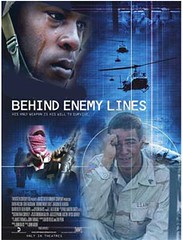
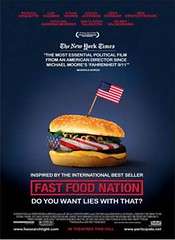
Author and game designer Allen Varney pinged me this evening with a wild story from Sky News: apparently some Iraqi insurgents are Photoshopping ads for Hollywood movies and turning them into creepy psyops about the slaughter of American soldiers, then peddling instructions on how to propagate them across the American webscape.

This includes predictable fare, like the Owen Wilson-Gene Hackman fighter pilot flick "Behind Enemy Lines"...


And Mel Gibson hero pics "The Patriot"...


...and "We Were Soldiers"...


As well as less intuitive choices, such as "Fast Food Nation"...


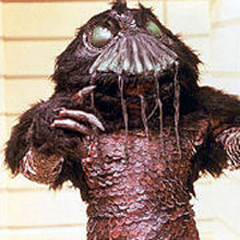
And "The Animal" (Rob Schneider=W?).


You heard it here first.

Free prize to anyone who can locate one of these busta-memes in actual covert placement on the web.

Sunday, July 8, 2007

Ethan the Skiffy Narrative Slayer


Over at Do the Math, jazz pianist and cultural omnivore Ethan Iverson of The Bad Plus has a No Fear of the Future-worthy encyclopedic post regarding the Tom Baker years of Doctor Who, the full run of Buffy, and the unexplored overlaps between the two. How Ethan manages to crank out bunker busters of the brain like this while touring the world to promote his band's new album, Prog (which you must buy if you haven't already -- totally ass-kicking piano trio covers of Tears for Fears' Everybody Wants to Rule the World and Rush's Tom Sawyer, along with some Bowie, some Bachrach, and bassist Reid Anderson's percussive masterpiece Physical Cities) only his nutritionist knows.


Especially brilliant is his disquisition on the strange pleasures of reading overthought analytical works regarding our favorite pop cultural comfort food:

'We all have guilty pleasures. One of mine is reading the analytical books about TB and BTVS. This is from chapter four, "Send up: Authorship and Organization," from Doctor Who: The Unfolding Text by John Tulloch and Manuel Alvarado (this is the chapter about TB):

"The disagreement over audiences and dramatic values between [Graham] Williams and [John] Nathan-Turner itself raised quite dramatically the ways in which and institution like Doctor Who can vary according to different production and professional practices. This chapter will look at ways in which variations within professional ideology materially affect production practices; and further, at ways in which professional values that are ostensibly identical can themselves be inflected differently according to pressure from within and outside the television industry."

'And this is by Neal King, from his essay "Brownskirts: Fascism, Christianity, and the Eternal Demon" from the anthology Buffy the Vampire Slayer and Philosophy: Fear and Trembling in Sunnydale:

"The quasi-fascist philosophy that justifies Buffy's slaying concerns me in my next discussion. I will outline the show's cosmology and by doing so, set up my imaginary Buffyverse, just to make my point about the show's potential for fascism. I conclude with a better solution to this problem, one that stretches credulity less and eliminates the show's nasty streak of racism. The important characteristics of the existing Buffyverse that prime it for fascism include elements of a Manichean racism (tempered by an Augustinian division of the world's evils), adherence to primal and state authority, and formation of citizenship in ritual combat. I consider these in turn."

'These are absurd pursuits, but nonetheless, if you want to keep me quiet and absorbed, just give me a new book of TB or BTVS analysis and you won't hear from me for several hours. In fact, that chapter in the Tulloch/Alvarado is one of the most interesting things I have ever read. The book as a whole is swollen with overly turgid prose, but in that chapter the great Douglas Adams is interviewed extensively in counterpoint with producers Williams and Nathan-Turner, and it gets quite gritty and revealing! As far as Buffy and fascism goes, I have never studied philosophy. Someone who has will undoubtedly protest that I need to actually read Augustine for real, but, I assure you, that is not going to happen. Fear and Trembling in Sunnydale is the closest that I am ever going to get.'

Check it out.

http://thebadplus.typepad.com/dothemath/2007/07/modern-mythic-t.html

Black pearls on a Zinnia

After reading the post at Boing Boing the other day regarding the use of the iPhone camera as a microscope, I took a stab at some amateur macro to document the splendid string of black pearls (some sort of insect eggs) I discovered on a Zinnia snipped from my garden and now sitting in a vase in my kitchen.


Very cool.